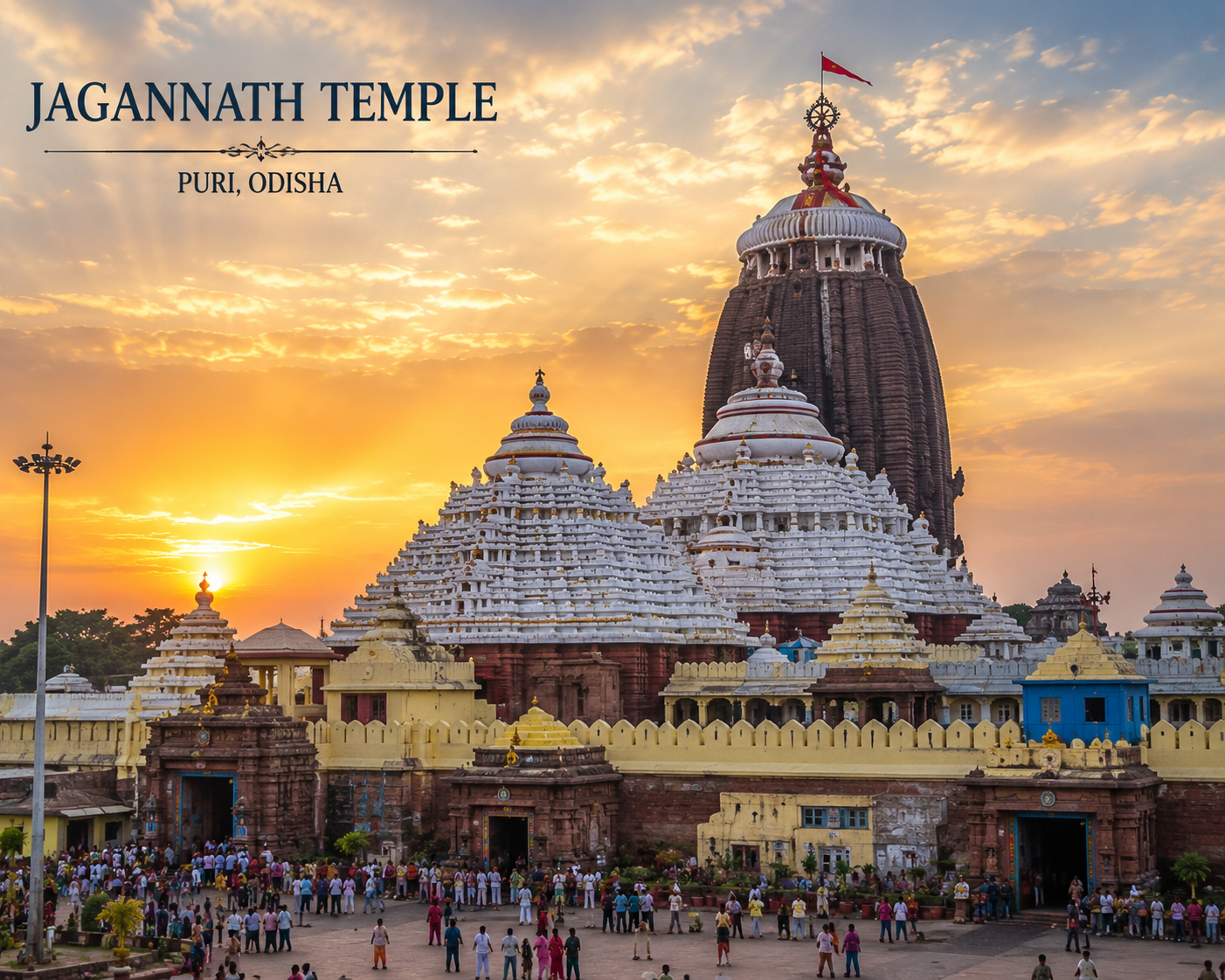
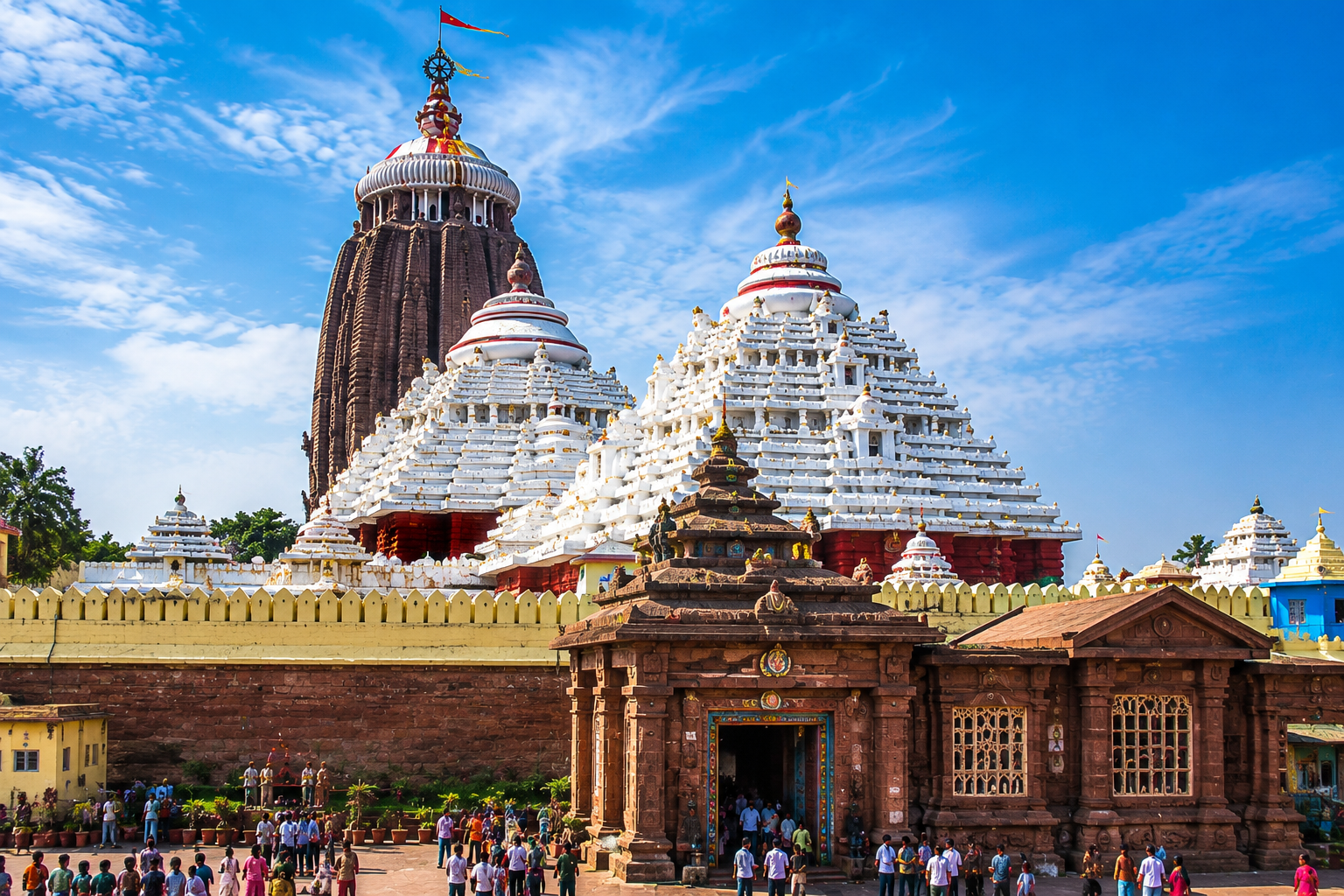
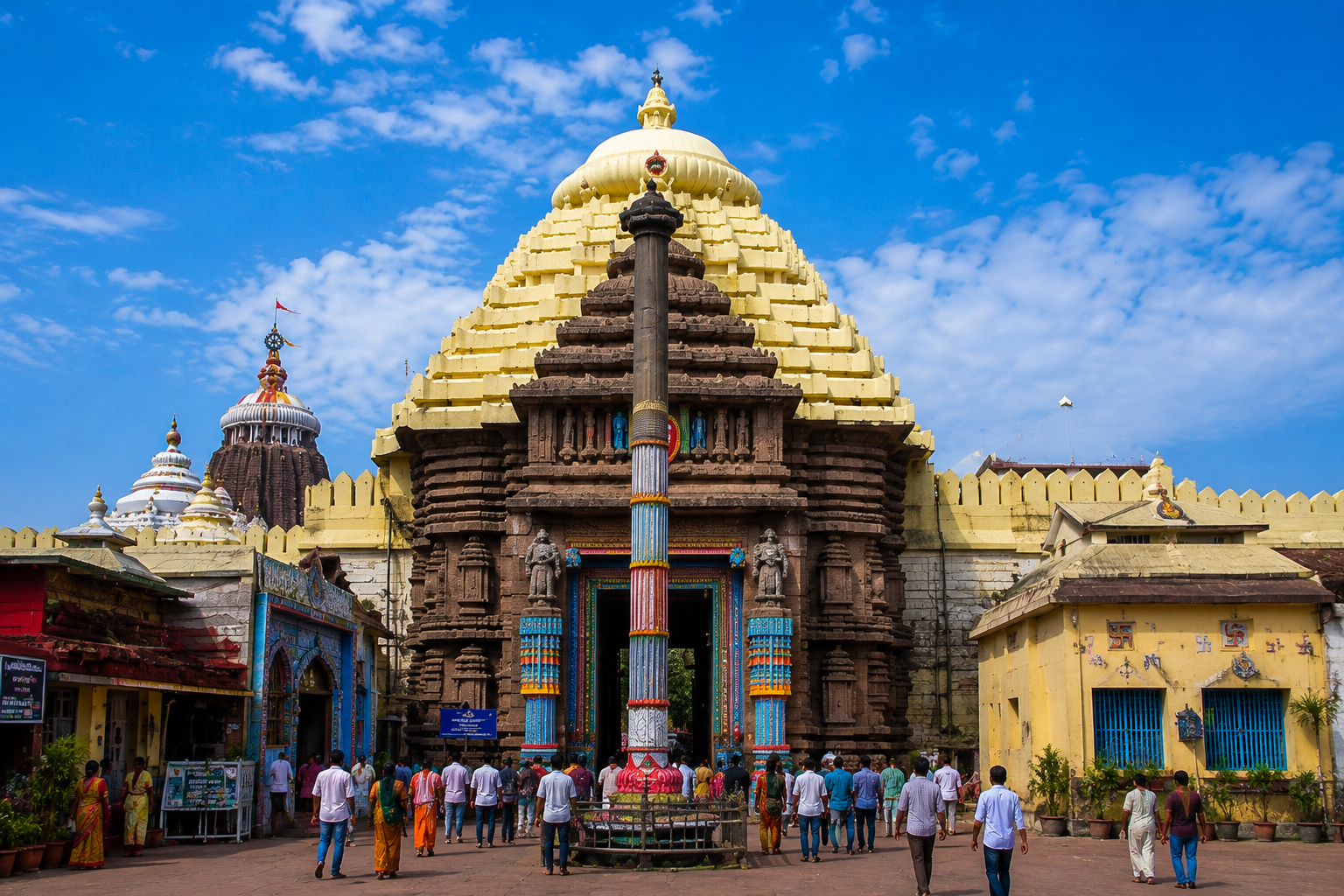
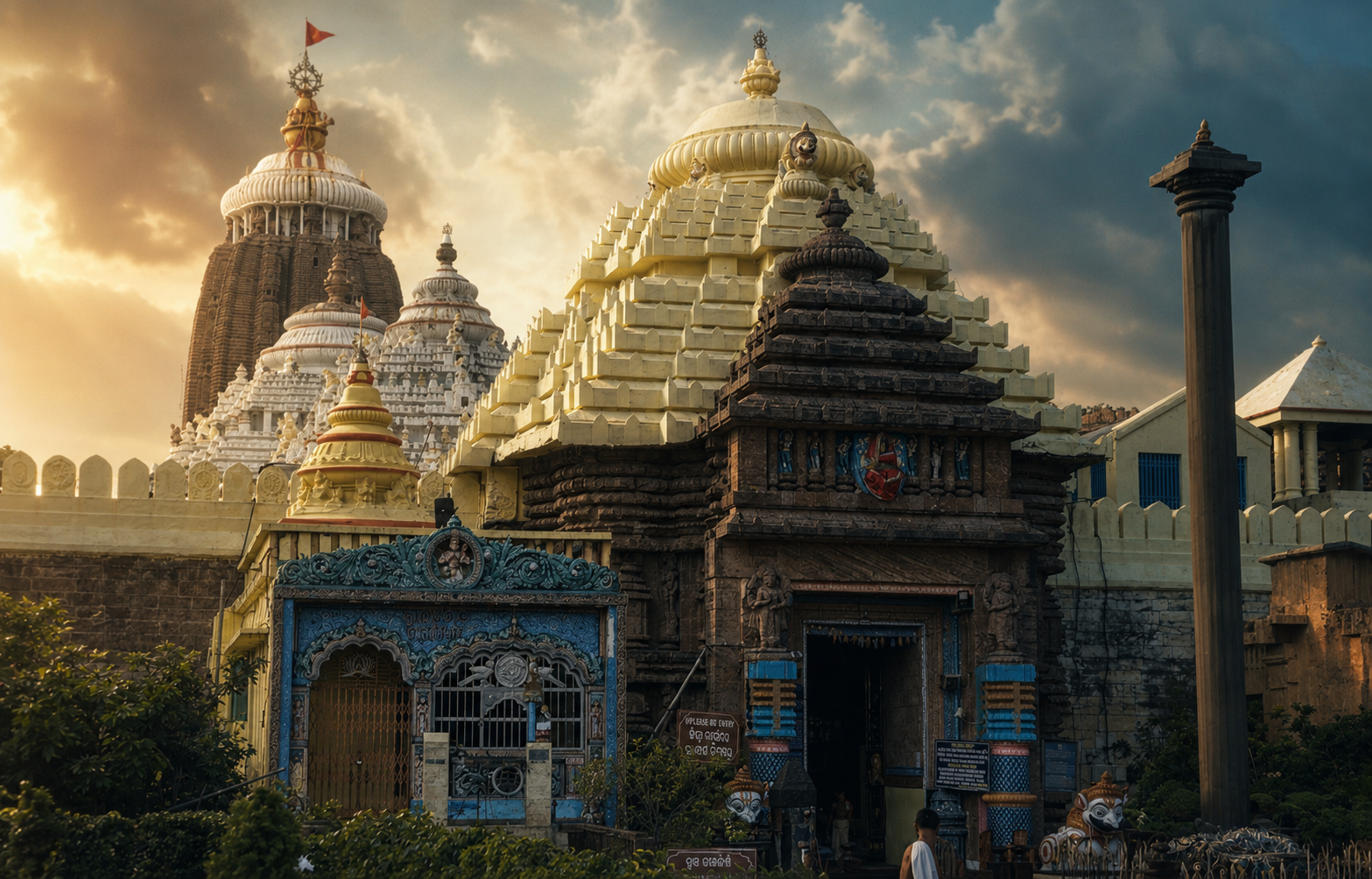
Jagannath Temple is one of the most famous and sacred Hindu temples in India. It is located in the holy city of Puri in the state of Odisha. Dedicated to Lord Jagannath, a form of Lord Vishnu and Krishna, the temple is one of the four holy pilgrimage sites (Chari Dham) that every Hindu wishes to visit at least once in his lifetime. Every year, lakhs of devotees and tourists from all over India and the world visit Puri to seek blessings and witness its unique traditions. The temple is not just a place of worship but also a symbol of the rich cultural heritage, architecture, spirituality and history of Odisha.
History:
The present Jagannath Temple was built in the 12th century by King Anantavarman Chodgangadeva of the Eastern Ganga Dynasty. Later, King Ananga Bhima Dev completed its construction. However, according to Hindu mythology, the worship of Lord Jagannath began much earlier. Legend has it that the Malwar king Indradyumna had a divine vision of Lord Vishnu and built the first temple after discovering a sacred wooden idol known as Daru Brahma. The divine architect Lord Vishwakarma is believed to have carved the idols of Lord Jagannath, Lord Balabhadra and Goddess Subhadra under mysterious circumstances. Over the centuries, the temple has survived attacks and invasions. The idols have been moved several times to protect them from invaders. Today, the temple is one of the most revered centres of Hindu faith.
Architecture:
The Jagannath Temple is a masterpiece of Kalinga architecture. The temple stands about 65 metres (214 ft) high and covers a vast area surrounded by massive walls. The temple complex consists of four main parts: Vimana (sanctuary):The main temple where Lord Jagannath, Lord Balabhadra and Goddess Subhadra are worshipped. Jagamohana: The assembly hall where devotees gather. Naat Mandir: The dance hall where devotional performances were once held. Bhog Mandapa: Where food offerings are prepared before being offered to the deities. The high spire of the temple is crowned with the sacred Neelchakra, an eight-pointed wheel made of metal alloy. A large red flag flies over the temple, and is changed every day by specially trained servants.
Main Deities:
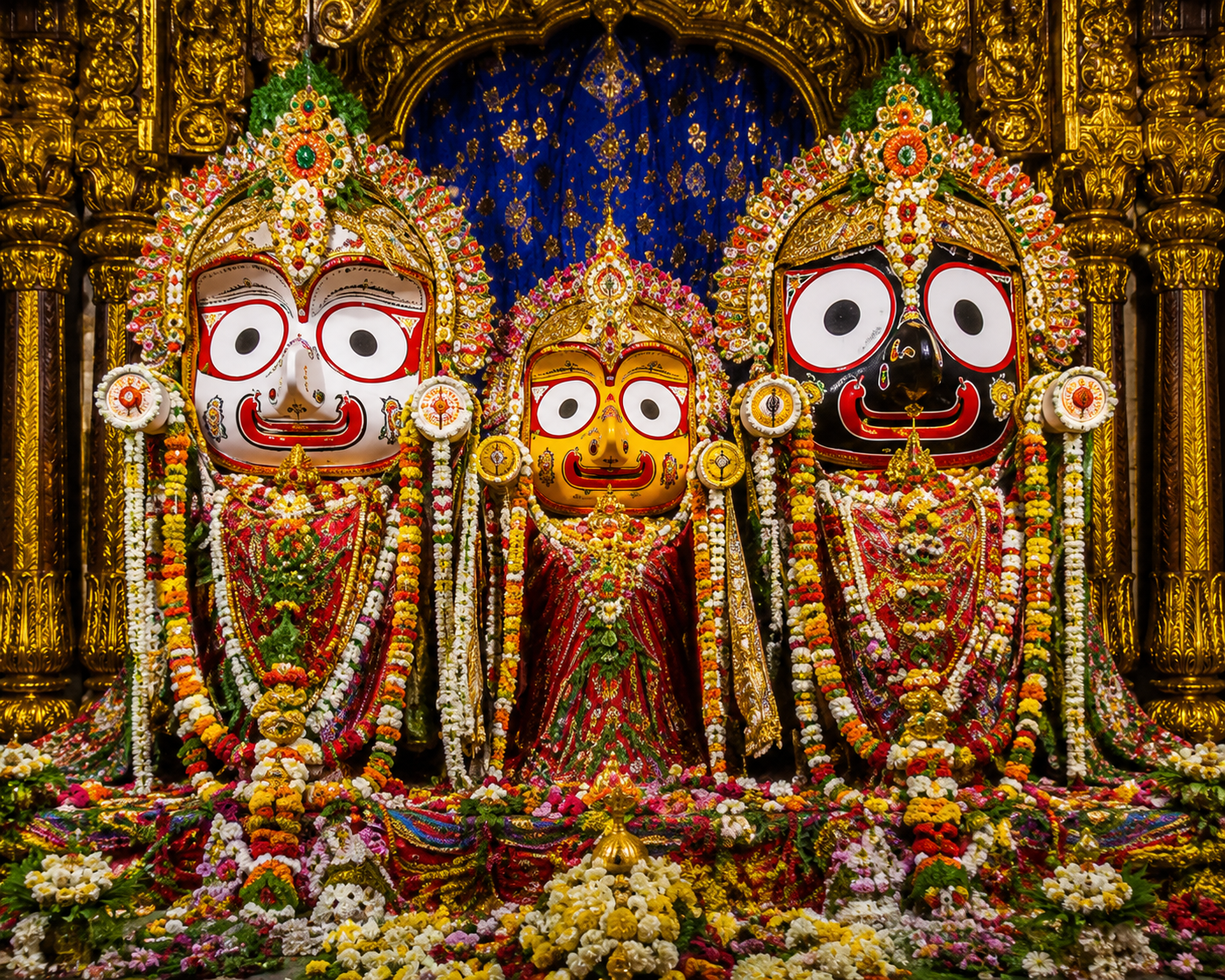
There are four main deities in the temple: Lord Jagannath – Worshipped as a form of Lord Krishna, the Lord of the Universe. Lord Balabhadra – Jagannath’s elder brother. Devi Subhadra – Sister of Jagannath and Balabhadra. Sudarshan Chakra – Worshipped with three deities. Unlike most Hindu idols made of stone or metal, these idols are carved from the sacred neem tree.
Nabakaleva Festival:
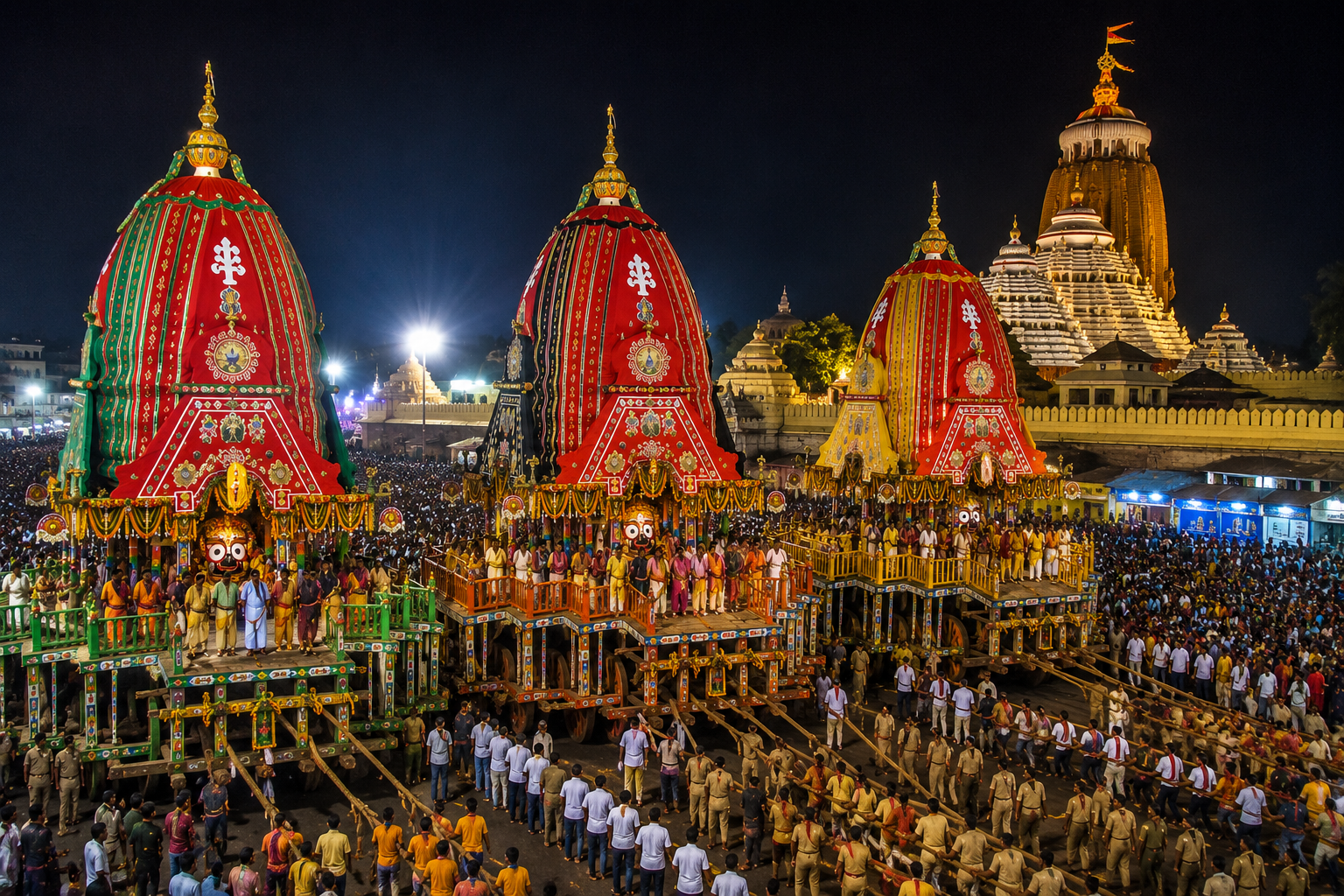
One of the most unique traditions of the Jagannath Temple is the Nabkalevar, which means new body. This festival is celebrated approximately every 12 to 19 years when the idols are replaced with new carved wooden idols made from the sacred neem tree selected through ancient rituals. The divine essence called Brahma Jai is transferred from the old idol to the new idol in a highly secretive ritual performed only by selected priests. Rath Yatra (Chariot Festival) Rath Yatra is the most famous festival associated with the Jagannath Temple. It is celebrated every year in the Hindu month of Asadh (June-July).
During the festival:
Lord Jagannath, Lord Balabhadra and Goddess Subhadra are placed on three beautifully decorated wooden chariots. Thousands of devotees pull the chariots from the Jagannath Temple to the Gundicha Temple. During the Bahuda Yatra, the deities stay there for a few days before returning to the main temple. Lakhs of pilgrims attend this festival, making it one of the largest religious gatherings in the world.
Mahaprasad:
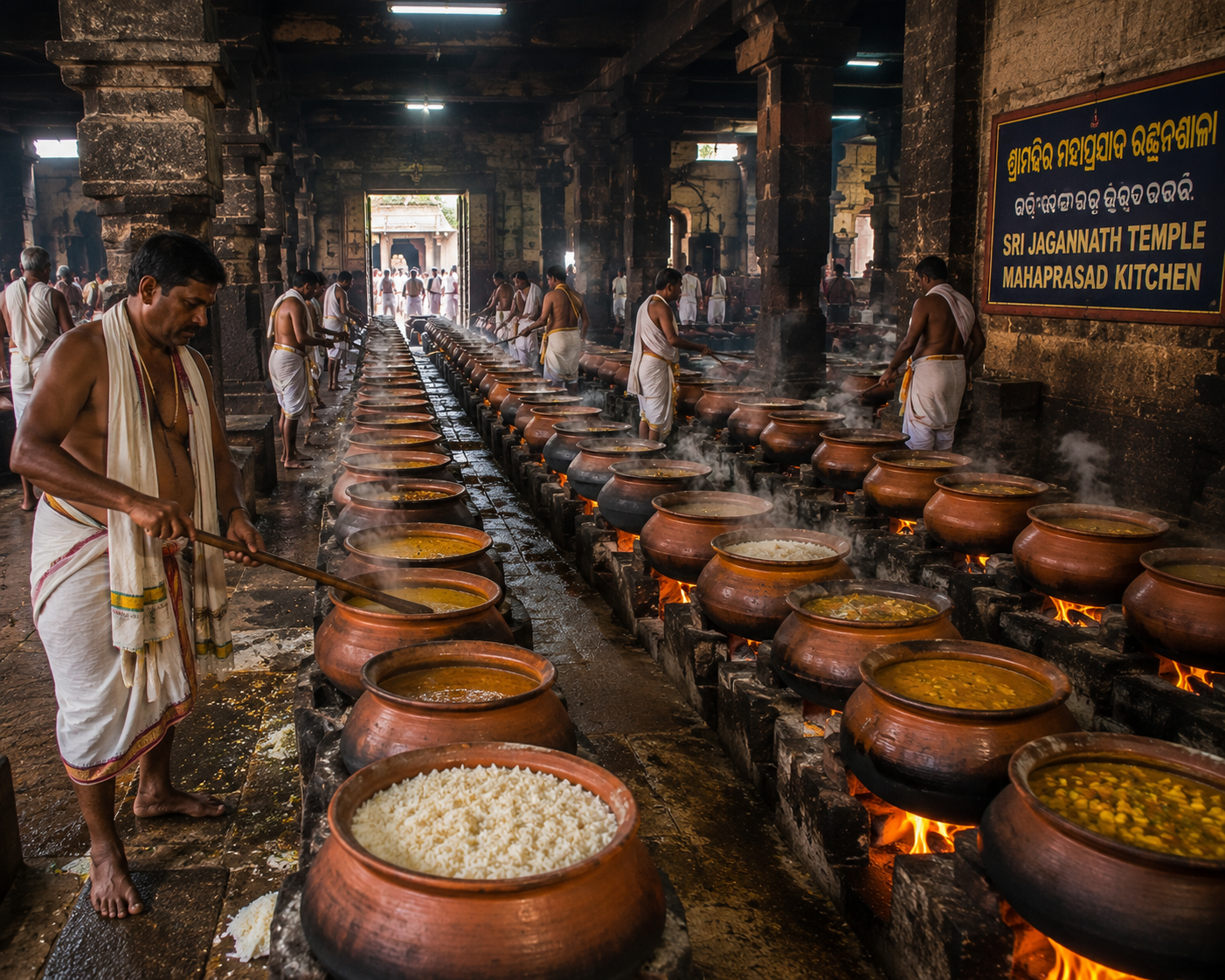
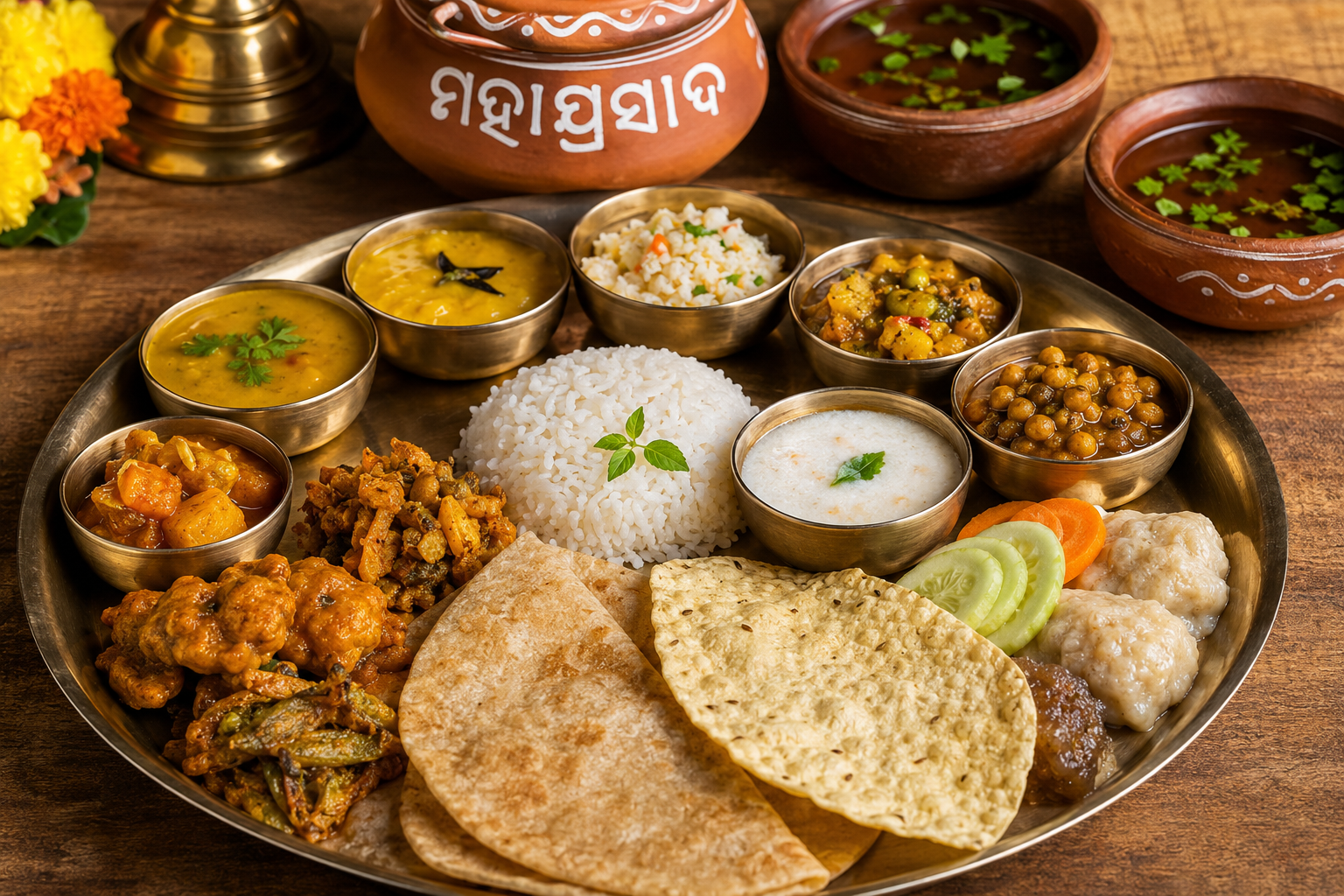
The Mahaprasad of the Jagannath Temple is famous throughout India. It is prepared in the world’s largest temple kitchen. Interesting facts include: More than 500 cooks and hundreds of helpers prepare the food daily. The food is cooked in earthen pots using firewood. The pots are stacked one on top of the other, and surprisingly, according to local beliefs, the top pot is cooked first. The Mahaprasad is considered sacred and is shared by people regardless of caste, community or social status.
Temple Kitchen:
The Jagannath Temple Kitchen is one of the largest functioning temple kitchens in the world. Features include: Hundreds of clay ovens. Thousands of clay pots used daily. Preparation of over 50 different food items. Capacity to serve thousands of devotees daily. This food is offered to the deities before being distributed as Mahaprasad.
Religious significance:
The Jagannath Temple has immense spiritual significance because: It is one of the Chari Dham pilgrimage sites established in Hindu tradition. It is one of the most important centres of Vaishnavism. Saints like Chaitanya Mahaprabhu spent many years here.