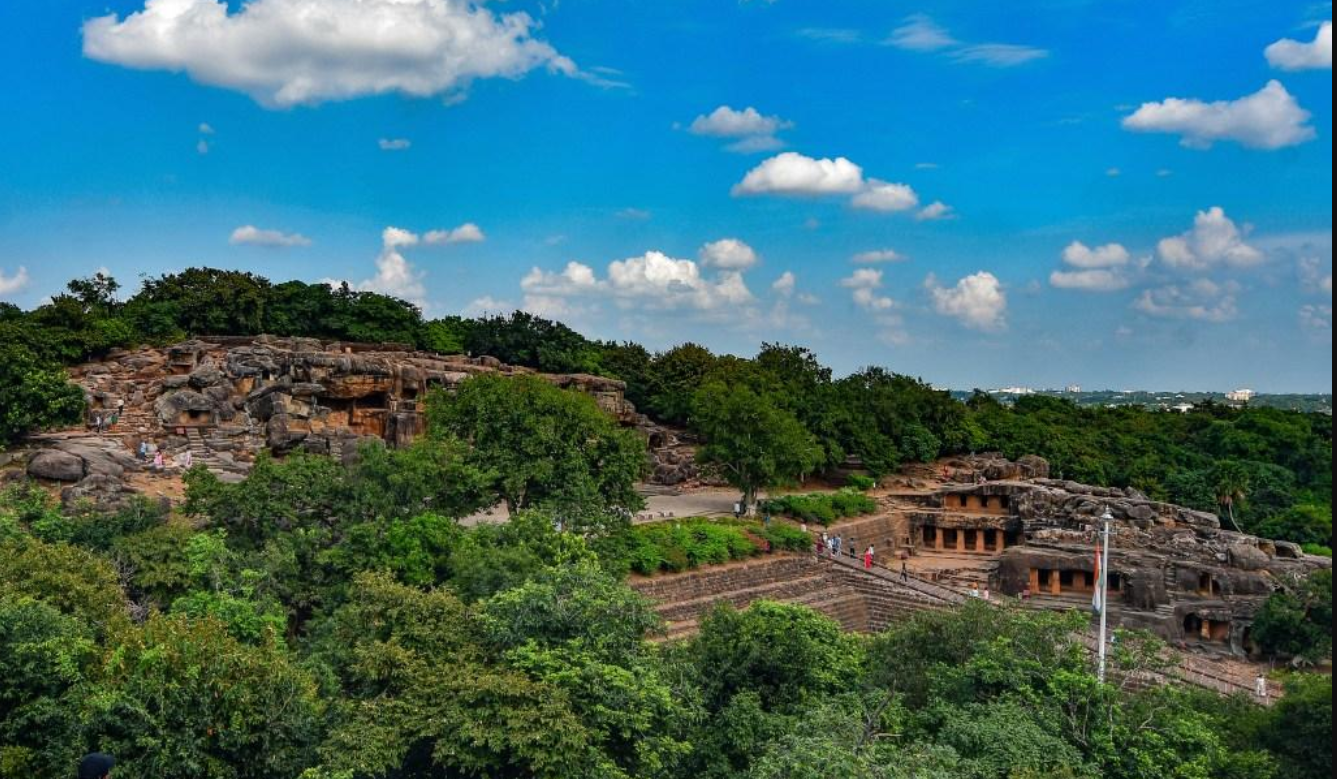
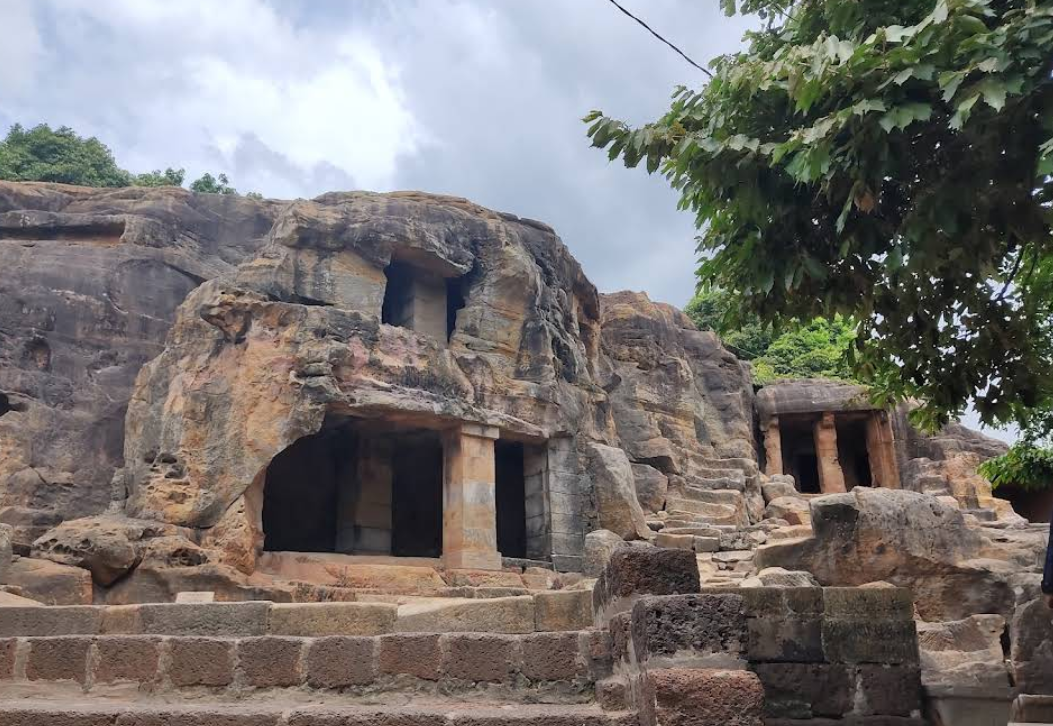
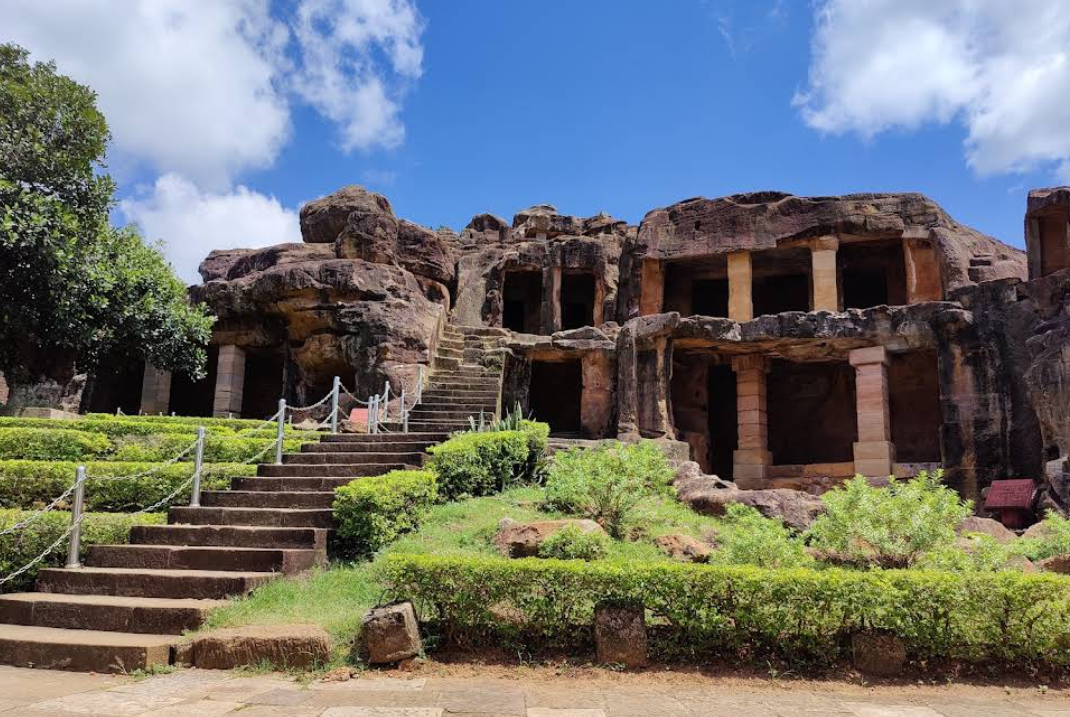
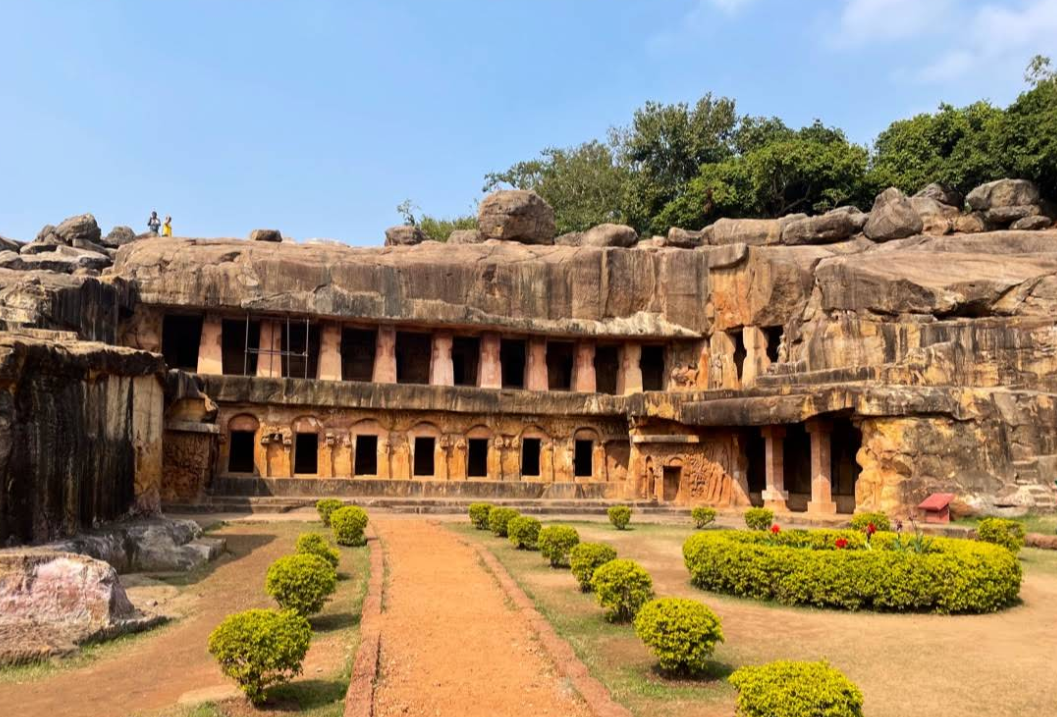
The Udayagiri and Khandagiri Caves are among the most important historical and archaeological monuments in India. Located about 7 km from Bhubaneswar, Odisha, these ancient rock-cut caves were carved into two adjacent sandstone hills during the 2nd century BCE. They were built mainly as residences and meditation centers for Jain monks under the patronage of King Kharavela, the famous ruler of the Mahameghavahana Dynasty. Today, the caves are a symbol of Odisha’s glorious past and attract thousands of tourists, historians, and devotees every year.
Location:
State: Odisha City: Bhubaneswar Distance from Bhubaneswar Railway Station: About 7 km Nearest Airport: Biju Patnaik International Airport, Bhubaneswar Best Time to Visit: October to March Neare by attractions:Lingaraj Temple, Bhubaneswar
History:
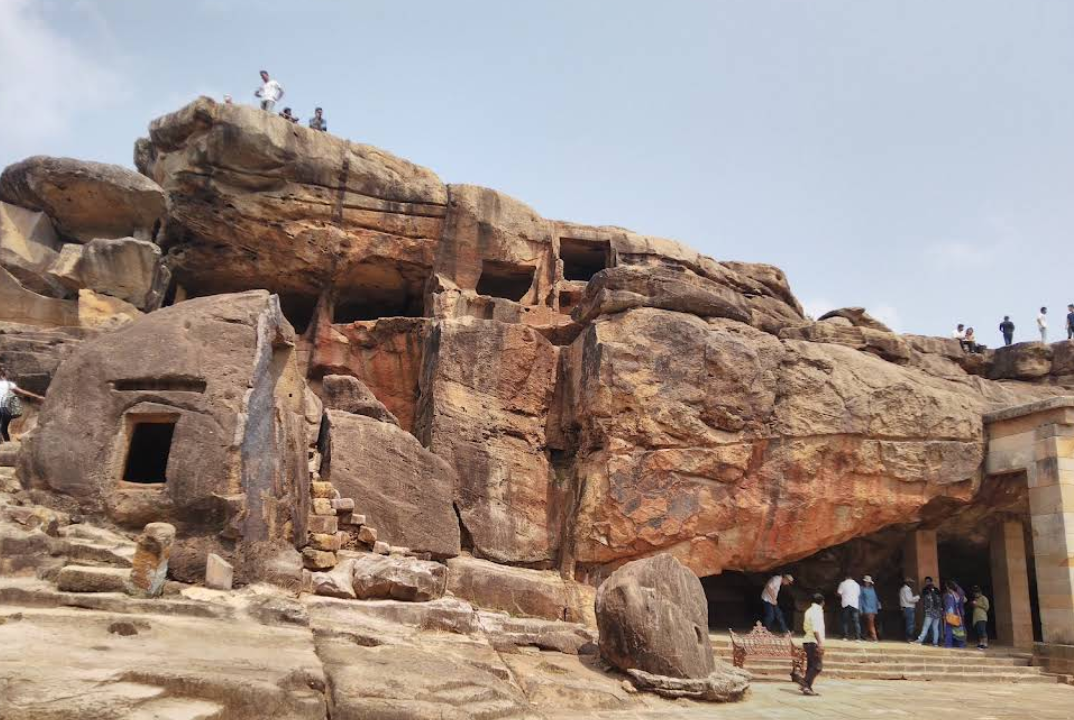
The caves were excavated during the reign of King Kharavela, one of the greatest rulers of ancient Kalinga. Kharavela was a follower and supporter of Jainism and commissioned these caves as living quarters for Jain monks, providing them with peaceful places for meditation, worship, and religious study. Originally, historians believe there were 117 caves, but only 33 caves survive today. Among these, 18 caves are located on Udayagiri Hill and 15 caves are on Khandagiri Hill. These caves represent one of the earliest examples of rock-cut architecture in eastern India. Meaning of the Names Udayagiri means “Hill of Sunrise”. ” Khandagiri means “Broken Hill.” The two hills stand opposite each other and are separated by a road.
Architecture:
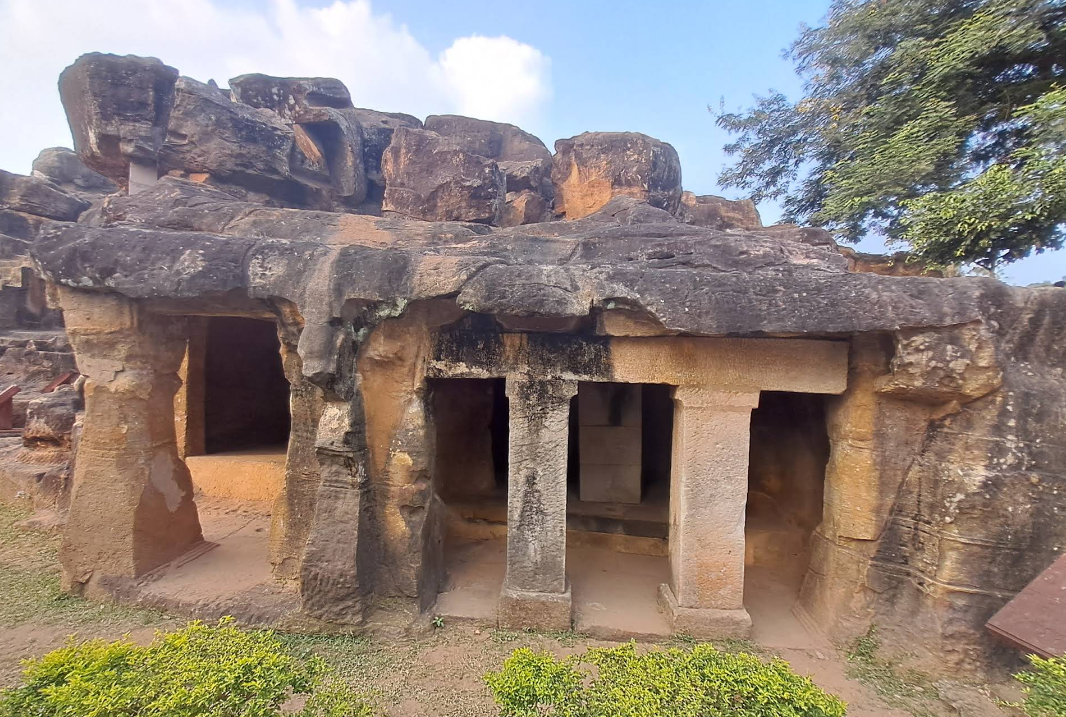
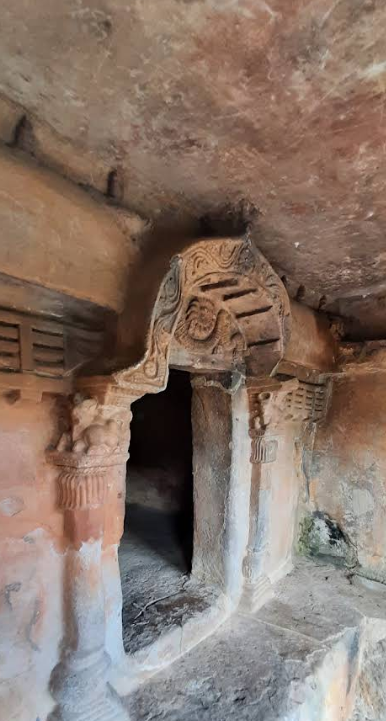
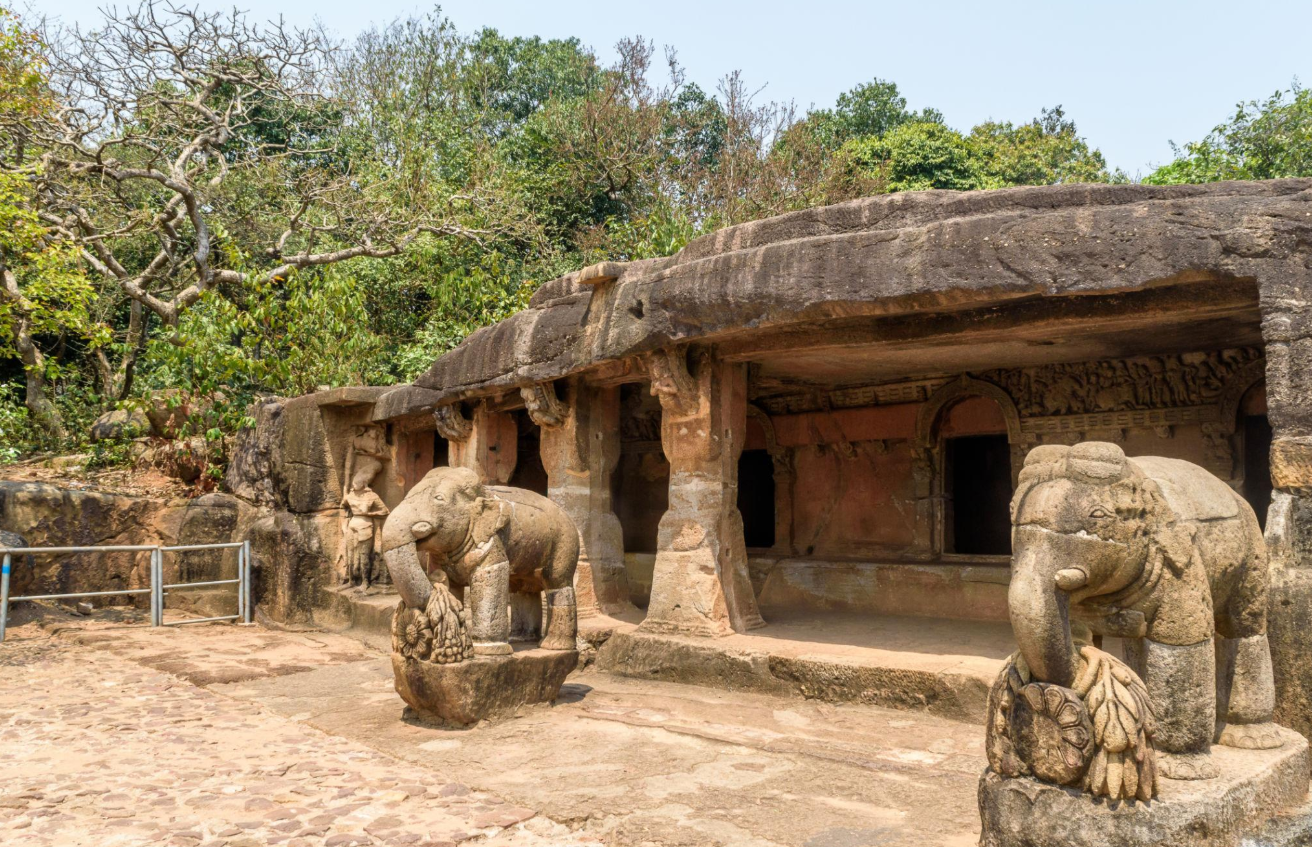
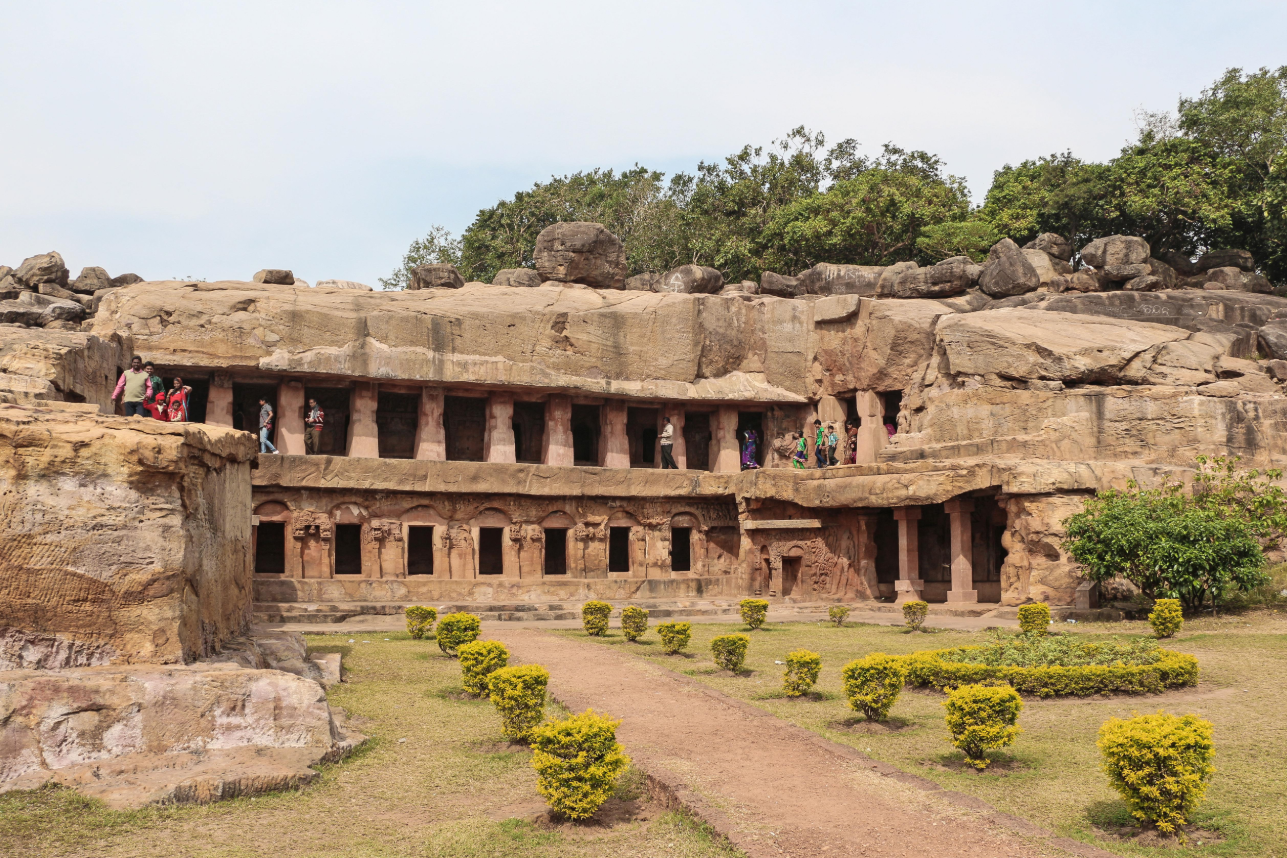
The caves are carved directly into sandstone rocks using simple hand tools. Although built over 2,000 years ago, they display remarkable engineering and artistic skill. Rock-cut chambers for monks Stone benches used for sleeping Verandas and meditation rooms Beautiful sculptures and carvings Water drainage channels Decorative pillars Animal figures, royal processions, and religious symbols Most caves are simple in design because they were intended for ascetic living rather than luxury.
Major Caves in Udayagiri
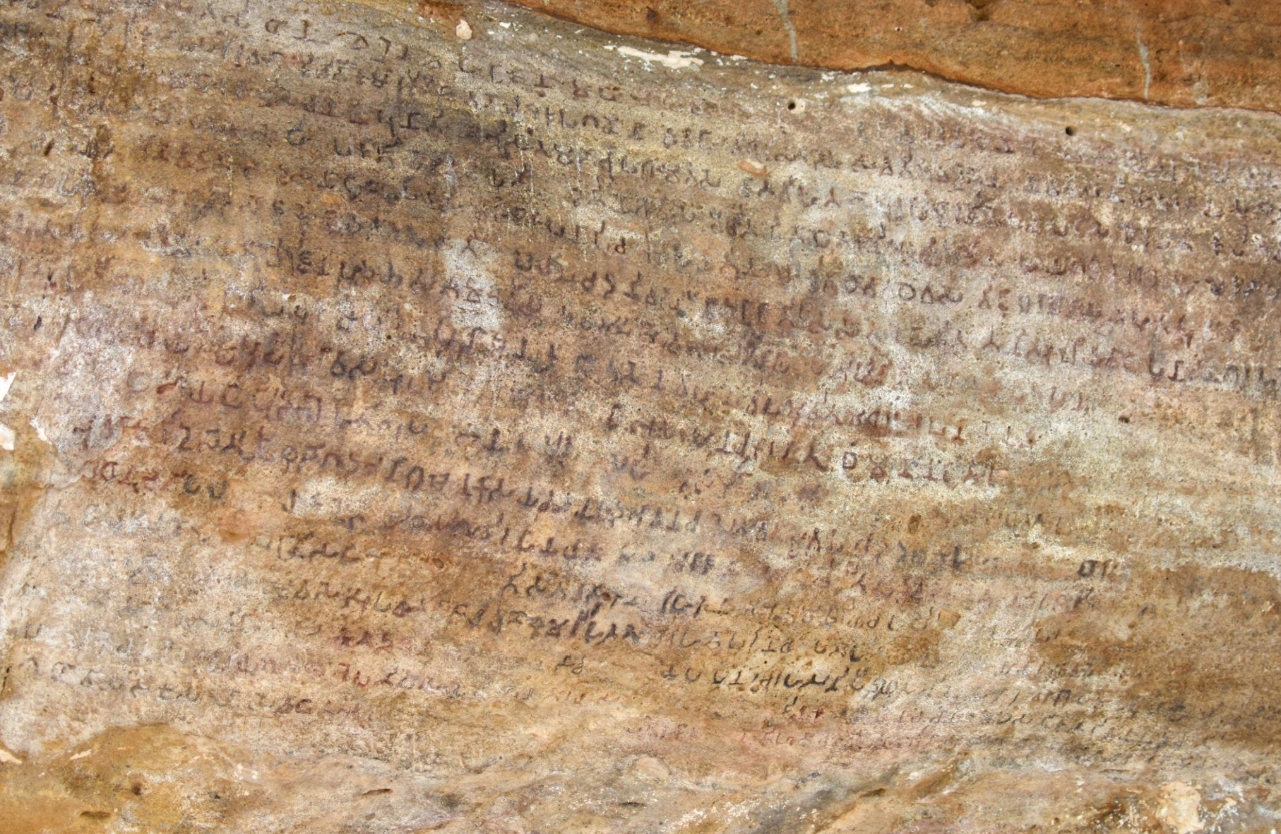
Hathigumpha (Elephant Cave) Hathigumpha is the most famous cave because it contains the 17-line Hathigumpha Inscription of King Kharavela, written in the Brahmi script and Prakrit language. This inscription records the king’s achievements, military campaigns, public works, and support for Jainism. It is one of the most valuable historical records of ancient India. Rani Gumpha (Queen’s Cave) Rani Gumpha is the largest and most beautiful cave in the complex. It is a two-storeyed structure decorated with detailed carvings of dancers, musicians, animals, royal processions, and hunting scenes. It is regarded as a masterpiece of ancient rock-cut architecture. Ganesh Gumpha This cave is known for sculptures of elephants and later carvings of Lord Ganesha. It also contains beautiful reliefs depicting royal life and religious themes. Tiger Cave (Vyaghra Gumpha) The entrance resembles the open mouth of a tiger, making it one of the most unique caves in the complex.
Major Caves in Khandagiri:
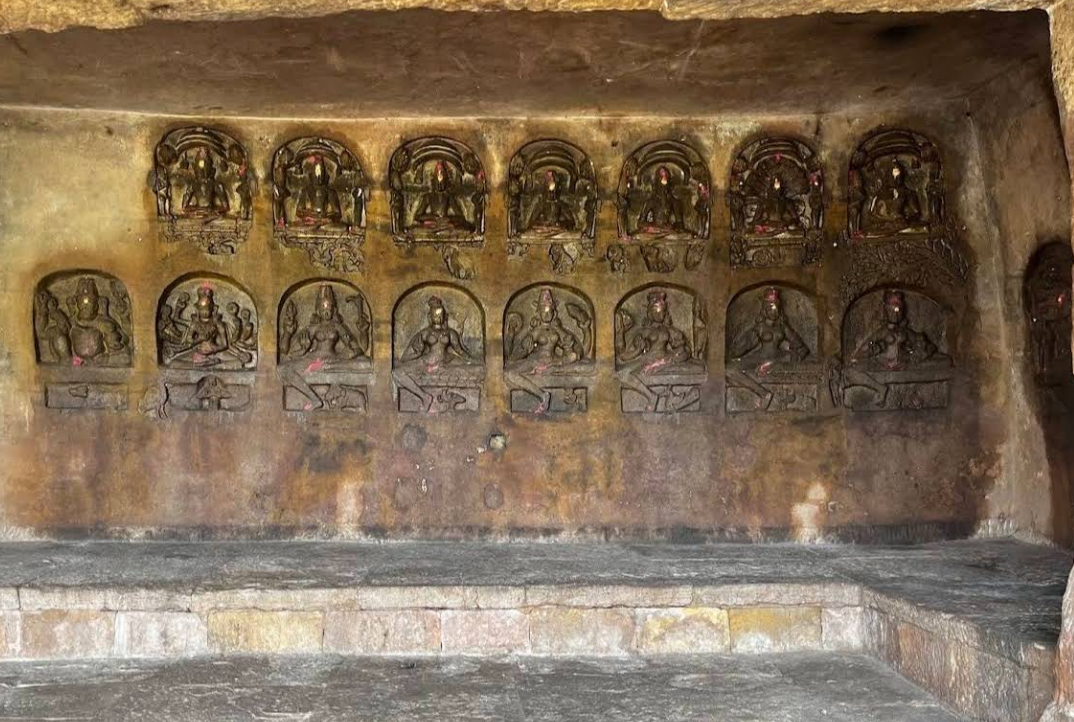
Important caves on Khandagiri Hill include: Barabhuji Cave – Features carvings of Jain deities. Trishula Cave – Contains images of the 24 Jain Tirthankaras. Ambika Cave – Famous for sculptures of Yaksha and Yakshini associated with Jainism. These caves reflect the religious importance of Jainism in ancient Odisha.
Religious Importance:
The caves served as monasteries where Jain monks lived simple lives devoted to meditation, learning, and spiritual practice. They played a significant role in the spread of Jainism throughout eastern India and remain sacred to many Jain pilgrims today.
Artistic Importance:
The carvings found throughout the caves depict: Royal ceremonies,Hunting scenes,Musicians and dancers Elephants, lions, and other animals,Floral designs Jain religious symbols These sculptures provide valuable insights into the lifestyle, clothing, culture, and beliefs of ancient Kalinga. Archaeological Importance The Udayagiri and Khandagiri Caves are considered one of India’s finest archaeological treasures because they preserve: Early Jain architecture Ancient inscriptions Rock-cut engineering Historical records of King Kharavela Evidence of ancient Indian art and culture Researchers continue to study these caves to understand the history of ancient Odisha and Jainism.
Tourist Attractions:
Ancient rock-cut caves,Historic inscriptions,Panoramic views of Bhubaneswar Peaceful surroundings,Beautiful sculptures,Photography opportunities,Religious monuments Best Time to Visit The ideal time to visit is October to March, when the weather is cool and comfortable. Early mornings and evenings are especially pleasant for exploring the hills. How to Reach: By Air: Biju Patnaik International Airport is about 6–7 km away. By Train: Bhubaneswar Railway Station is around 7 km away. By Road: The caves are easily accessible by taxis, buses, and auto-rickshaws from anywhere in Bhubaneswar.
Interesting Facts:
The caves are over 2,000 years old. Only 33 of the original 117 caves survive today. Udayagiri has 18 caves, while Khandagiri has 15 caves. The Hathigumpha Inscription is one of the most important inscriptions in Indian history. Rani Gumpha is the largest and most elaborately decorated cave. The caves represent one of the earliest examples of Jain rock-cut architecture in India.
Conclusion:
The Udayagiri and Khandagiri Caves are a priceless heritage of Odisha and India. They beautifully combine history, religion, architecture, and art in a single destination. Built more than two millennia ago, these caves continue to showcase the skill of ancient craftsmen and the spiritual traditions of Jainism. A visit to these caves offers not only a journey into India’s rich past but also an unforgettable experience of its cultural and architectural legacy.